
Winter flying, de-icing, holdover time and realistic schedules
Before take-off the wing must be clean, and in winter that takes time, fluid and sometimes a queue. How de-icing works, what it costs and how to plan around it.
Winter rarely stops a well-run charter, but it does reshape the morning. Before take-off the aircraft must be free of frost, snow and ice, and getting it there takes time, fluid and on busy days a place in the queue. Once you understand why, you can plan a schedule that survives a snowy Saturday in the Alps.
Why a clean wing is not optional
A wing produces lift because air flows smoothly over a carefully shaped surface. Even a thin, rough layer of frost disturbs that flow, reducing lift, increasing drag and raising the speed at which the wing stalls. Snow and ice do the same, and the effect on handling is hard to predict. That is why the rules do not ask for a reasonably clean aircraft, they ask for a clean one.
In the United States, Part 135 prohibits take-off with frost, ice or snow adhering to the wings, control surfaces and other critical parts, a principle known as the clean aircraft concept. European rules for commercial flights require the commander to start a take-off only when the aircraft is clear of any deposit that could affect its performance or controllability, unless the flight manual permits it.
Contamination does not need falling snow. After a long flight at altitude, the remaining fuel stays very cold and can chill the wing enough for to form in humid air, even when the air temperature on the ground is above freezing.
The rules do not ask for a reasonably clean aircraft, they ask for a clean one.

De-icing and anti-icing are two different jobs
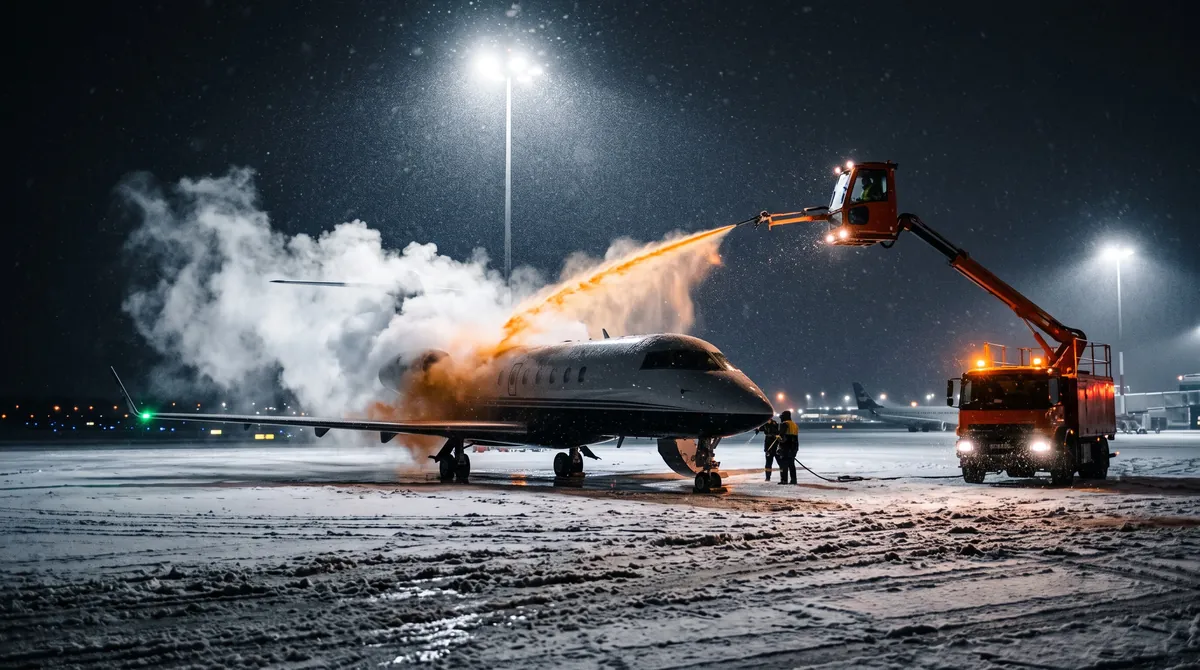
De-icing removes what is already there. It is usually done with Type I fluid, a thin mix of glycol and water that is heated and sprayed under pressure, and normally dyed orange. It melts and washes off frost, snow and ice, but protects the surface only briefly.
prevents new contamination from forming for a limited time. It uses thickened fluids, chiefly Type II and Type IV, which cling to the wing while the aircraft is parked and taxiing and then shear off during the take-off roll. Type IV is usually dyed green and gives the longest protection. Type III is a thickened fluid designed for aircraft with lower rotation speeds.
When conditions call for both, the handler uses a : hot Type I fluid first, then the thickened fluid before the first layer can freeze. In lighter conditions a single heated application can do both jobs at once. Not every aircraft is approved for every fluid, because thickened fluids need enough speed on the runway to flow off, so the manufacturer’s procedures decide what may be used.
Holdover time, the clock that starts at the spray
is the estimated period during which the anti-icing fluid keeps frost, snow and ice from building up on the treated surfaces. It begins when the final application of fluid starts, not when the truck drives away, and it is published as a range rather than a guarantee.
The range depends on the type of fluid and how far it is diluted with water, on the outside air temperature and above all on the type and intensity of precipitation. Light snow gives considerably more time than heavy snow, and wet snow or freezing drizzle can shorten it sharply. In some conditions, such as heavy freezing rain or hail, there is no holdover guidance at all. Regulators publish updated holdover tables every winter, and crews work from them on the day.
If the holdover time runs out before take-off, the aircraft generally has to be checked or treated again, which can mean returning to the de-icing pad and joining the queue once more. Crews therefore aim to de-ice as late as practical, usually with passengers on board and doors closed, so that none of the protection is wasted at the stand.
Who pays, and how a hangar helps
De-icing is usually not part of the original quote. The handler invoices it after the event, typically by the litre of fluid plus a service charge, and the operator passes it on. Nobody knows the quantity in advance: a frosty morning may need a quick treatment, while a two-step procedure on a large cabin jet in falling snow uses a great deal more fluid, and a second treatment after a delay adds to the bill again. It can add up to a significant sum.
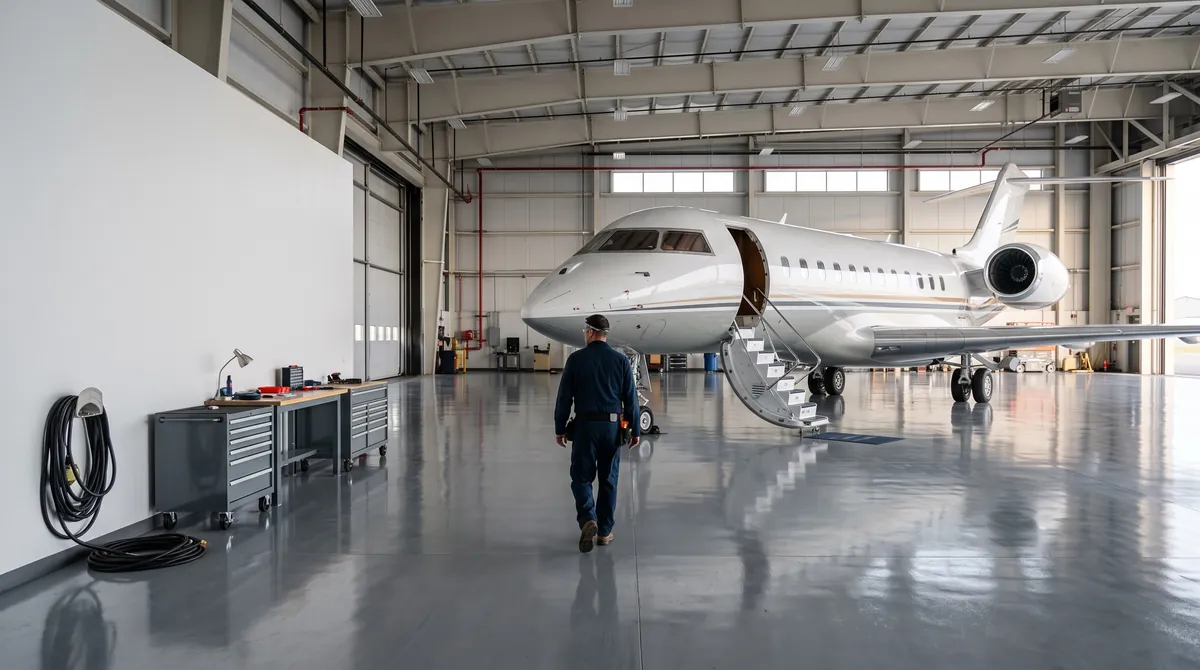
The most effective way to reduce it is hangarage. An aircraft that spends the night in a heated hangar has no frost or snow on it in the morning, and if it is towed out shortly before departure in dry weather it may need no treatment at all. In falling snow it still needs anti-icing, but far less fluid. You also board a warm cabin. Hangar space at busy winter airports is limited and charged separately, so ask for it when you book.
Building a winter schedule that works
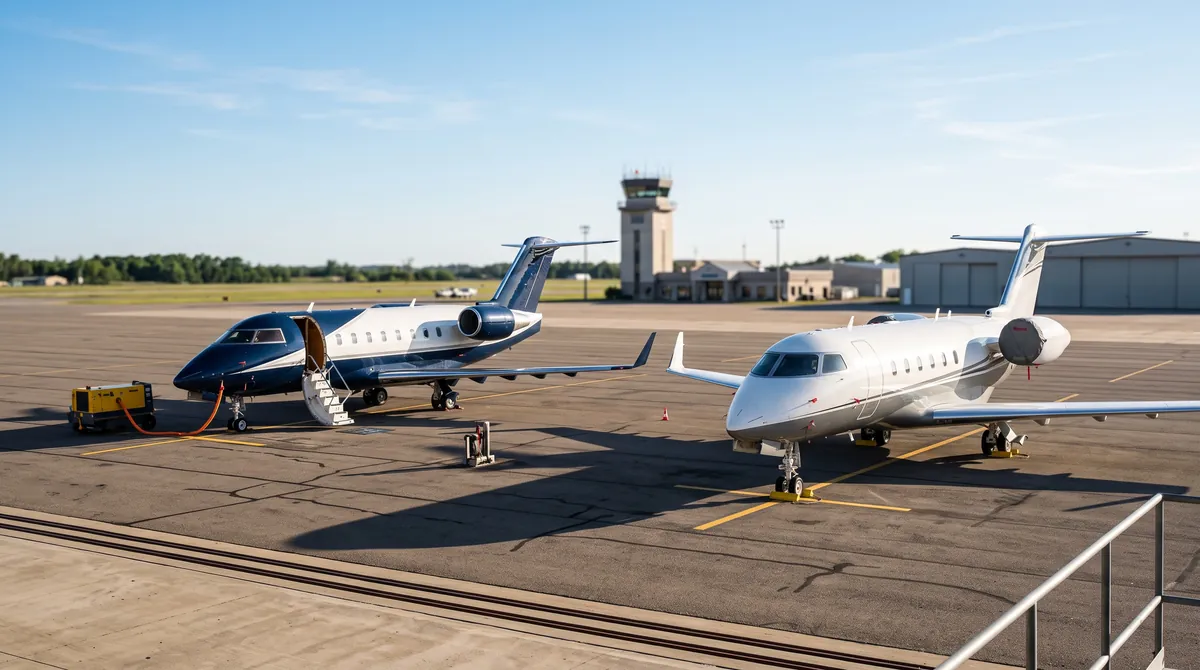
The busiest days are predictable. Airports serving the Alpine resorts, such as Geneva (LSGG) and Chambéry (LFLB), are at their most crowded on Saturdays in the ski season, and Aspen (KASE) in Colorado over the holidays. Runways close for snow clearing, de-icing rigs are shared, parking can run short and slots tighten. None of this is dangerous, it simply takes time.
- Plan an extra hour for departures on days with snow or freezing fog in the forecast.
- Ask whether the aircraft can be hangared the night before an early departure.
- Be at the aircraft on time, because de-icing is timed to your boarding.
- Keep onward connections loose on changeover days and avoid tight evening commitments.
- Remember crew duty: a long wait for de-icing counts against the crew’s working day too.
If the weather is beyond what the fluids and the aircraft can handle, the crew will wait or cancel, and that decision deserves respect rather than pressure. A delayed departure in a blizzard is an inconvenience. A rushed one is not a risk any reputable operator will take.
Terms in this article
- Holdover time
- The estimated time anti-icing fluid protects treated surfaces from new frost, snow or ice, counted from the start of the final application.
- Anti-icing
- Applying a protective fluid that prevents new contamination from forming on a clean aircraft for a limited time.
- Two-step procedure
- De-icing with hot fluid followed by a separate application of thickened anti-icing fluid.
- Cold-soaked fuel frost
- Frost that forms on a wing chilled by very cold fuel after a long flight, even above freezing.
Questions readers ask
Why is de-icing not included in my charter quote?
Because nobody knows in advance whether it will be needed or how much fluid it will take. The handler invoices it after the event, usually by the litre of fluid plus a service charge, and the operator passes it on. A light frost may need a short treatment, while heavy snow, a large aircraft or a second application after a delay can make the bill considerably larger.
Can a private jet take off while it is snowing?
Often yes, provided the aircraft has been treated with anti-icing fluid and takes off within the holdover time for the conditions. In heavy precipitation that time can be short, and in some conditions, such as heavy freezing rain or hail, there is no holdover guidance at all. The crew decides on the day, and waiting is sometimes the only safe choice.
Is de-icing faster for a private jet than for an airliner?
A smaller aircraft needs less fluid and less time on the pad, but it joins the same queue for the same rigs at many airports. On busy winter days the wait can be longer than the treatment itself. Hangaring the aircraft overnight and keeping your departure time flexible usually save more time than the size of the aircraft.